


Stand Mixer Motor Types: AC, Brushed DC and BLDC Explained
The motor affects a stand mixer’s torque, speed control, noise and overall performance. This guide explains the key differences between AC, brushed DC and BLDC motors and helps buyers choose the right motor system for different applications.

The motor is a key part of a stand mixer, but motor type or rated wattage alone does not determine actual mixing and kneading performance. For B2B buyers, the complete drive system—including motor, speed control, transmission, mechanical structure and thermal management—should be evaluated together.
Understanding Stand Mixer Motor Types
The motor is the power source of a stand mixer, but its performance cannot be evaluated by motor wattage alone. Motor type, operating speed, torque characteristics, speed control, transmission design and thermal management all influence how a mixer performs under different loads.
For household stand mixers, AC, brushed DC and brushless DC (BLDC) motors represent three different approaches to motor design and control. Each has different performance characteristics, system requirements and cost implications. For B2B buyers, the right choice should be based on the required mixing load, product positioning, target price and expected user experience.
AC Motor for Stand Mixers: When Is It the Right Choice?
AC motors are a practical choice for cost-sensitive and mainstream household stand mixers. They are suitable when competitive product cost, established technology and reliable mixing performance are the main priorities.
- Actual mixing load and dough-working requirements
- Motor operating speed and torque characteristics
- Transmission design and gear ratio
- Overload protection and thermal performance
- Actual load-test results rather than rated wattage alone
AC, Brushed DC and BLDC: Three Different Motor Approaches
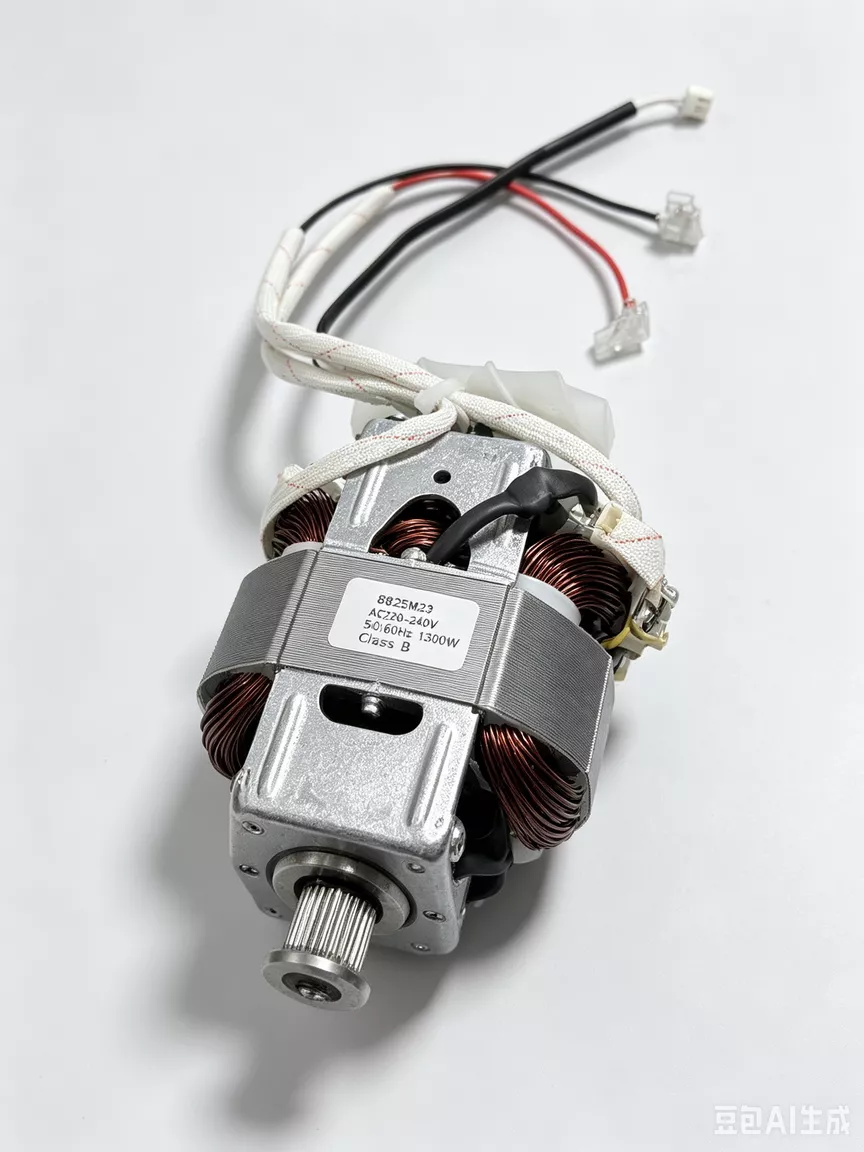 AC Motor
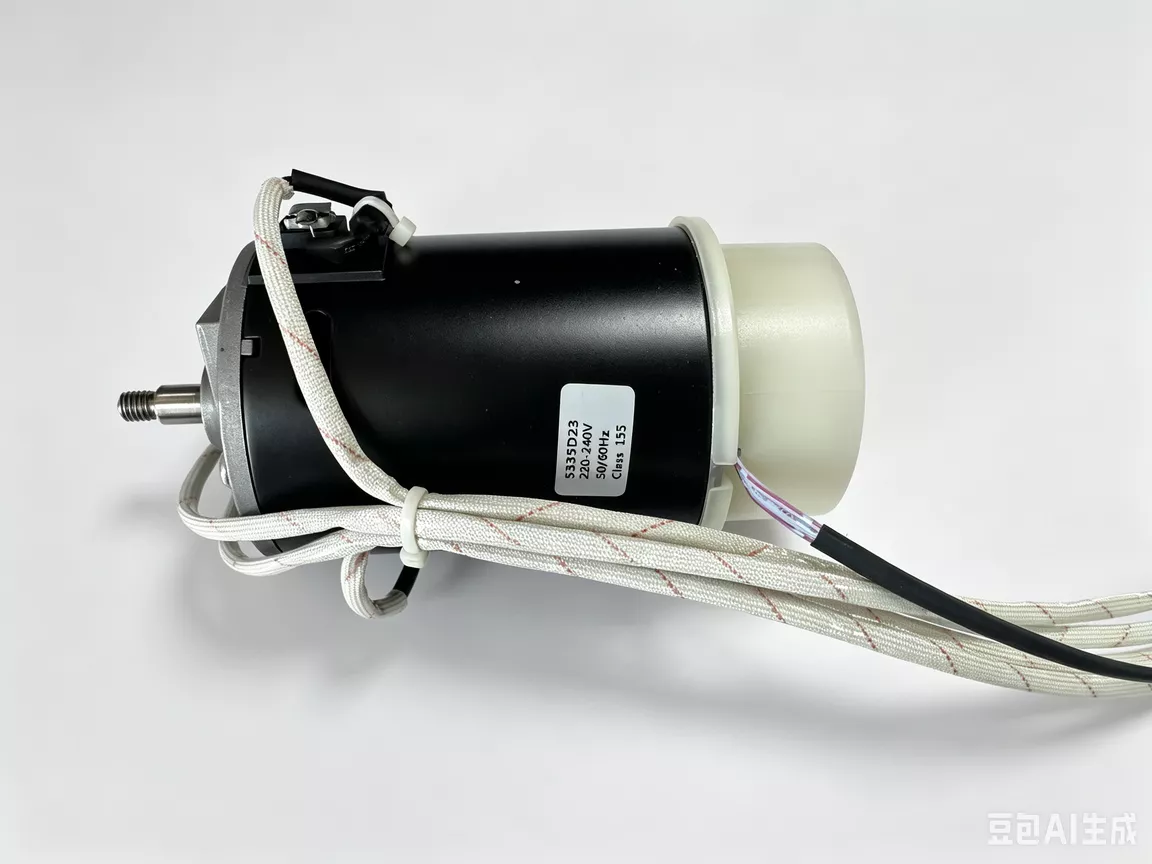 Brushed DC Motor
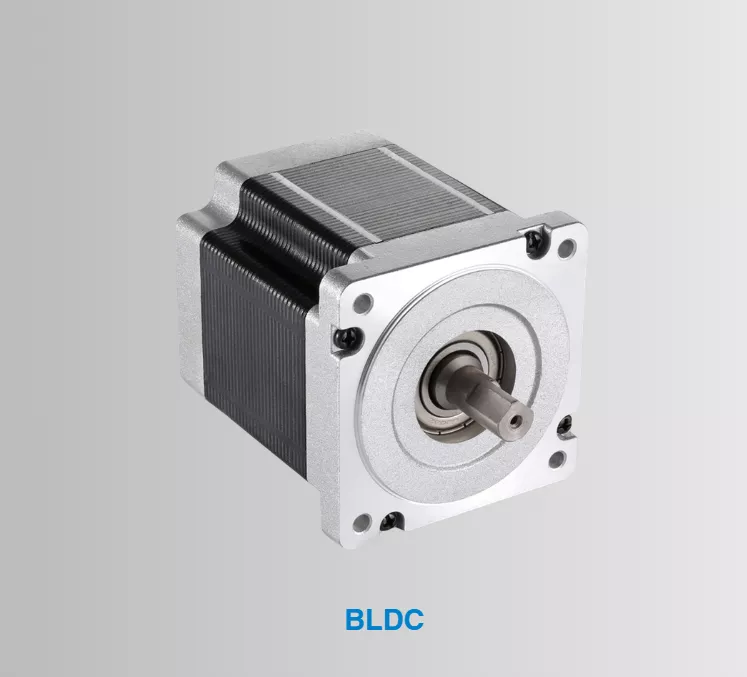 BLDC Motor
AC Motor
AC motors are a practical choice for cost-sensitive and mainstream household stand mixers. Their mature technology and relatively simple motor-control system make them suitable for products where competitive pricing and reliable basic mixing performance are the main priorities.
→ Purchase Recommendation:Choose AC when competitive cost, established technology and reliable mainstream performance are more important than advanced speed control, lower noise or maximum efficiency.
Brushed DC Motor
Brushed DC motors can provide high torque at low speed, lower operating noise and more precise speed control when properly matched with the transmission and control system. They are a practical option for stand mixers that require a strong balance between performance, controllability and product cost.
→ Purchase Recommendation:Consider brushed DC when low-speed torque, speed control and noise performance need to be improved without moving to the higher system cost of BLDC.
BLDC Motor
BLDC motors use electronic commutation instead of mechanical brushes. They can provide high efficiency, precise speed control and low brush-related maintenance, but require a more sophisticated electronic control system and normally result in higher overall system cost.
→ Purchase Recommendation:Consider BLDC when higher efficiency, precise control, reduced brush-related maintenance and premium product positioning justify the higher motor and control-system cost.
Brushed DC Motor for Stand Mixers: When Is It the Better Choice?
Brushed DC motors are a practical choice for stand mixers that require better speed control and useful low-speed torque characteristics than basic AC systems. They are particularly suitable for products where operating experience and mixing control are important, while overall system cost still needs to remain competitive.
What B2B Buyers Should Check
- Low-speed torque and actual performance under mixing load
- Speed-control range and control stability
- Motor temperature under repeated or heavy loads
- Brush and commutator design, service life and replacement requirements
- Controller performance and electromagnetic compatibility
- Actual noise and vibration performance and durability test results
→ Bottom Line: Brushed DC is a practical choice for mainstream and performance-focused stand mixers that need a strong balance of low-speed torque, speed control, noise performance and system cost.
BLDC Motor for Stand Mixers: When Is It Worth Choosing?
BLDC motors use electronic commutation instead of mechanical brushes. They can provide high efficiency, precise speed control and reduced brush-related maintenance, making them suitable for stand mixers positioned toward higher performance and a more advanced user experience.
What B2B Buyers Should Check
- Actual efficiency and performance under the intended mixing load
- Speed-control accuracy and stability
- Motor and controller temperature under repeated or heavy loads
- Controller reliability and electromagnetic compatibility
- Motor, controller and transmission matching
- Actual noise and vibration performance, durability and lifecycle test results
→ Bottom Line: BLDC is most suitable for higher-value stand mixers where efficiency, precise control and premium positioning justify the higher system cost. It should be selected for a clear product requirement—not simply because it is a newer motor technology.
AC vs Brushed DC vs BLDC: How Should B2B Buyers Compare Them?
The right motor should be selected according to the product's target performance, price positioning and user requirements—not motor wattage alone.
| Factor | AC | Brushed DC | BLDC |
|---|---|---|---|
| System Cost | Generally lower | Moderate | Generally higher |
| Speed Control | Basic to moderate, depending on system design | Flexible | Precise electronic control |
| Low-Speed Torque | Depends strongly on motor and system design | Good when properly matched | Good controllability when properly designed |
| Efficiency | Depends on motor architecture and operating point | Moderate | Generally higher |
| Maintenance | Depends on the specific AC motor architecture | Brushes and commutator are wear components | No mechanical brushes |
| Control System | Relatively simple in typical household platforms | Requires suitable controller | More sophisticated electronic control |
| Typical Positioning | Cost-sensitive / mainstream | Mainstream / performance-focused | Higher-value / advanced-control |
| Consider When | Competitive cost and established technology are priorities | Performance, control and cost need to be balanced | Efficiency, precise control and premium positioning justify higher system cost |
Stand Mixer Motor Buyer Checklist
Before selecting a stand mixer motor, B2B buyers should evaluate the complete drive system rather than comparing motor wattage alone.
- Motor type: AC, Brushed DC or BLDC
- Rated power and operating speed
- Torque characteristics under actual mixing loads
- Temperature rise under repeated or heavy operation
- Transmission type and motor-to-transmission matching
- Performance at low and high speeds
- Overload and thermal protection
- Noise and vibration performance
- Cost-sensitive: AC can be a practical solution.
- Mainstream / performance-focused: Brushed DC can provide a strong performance-cost balance.
- Higher-value: BLDC can be considered when efficiency and precise control justify the additional cost.
- Ask for actual performance and durability test results.
- Check noise and temperature under representative loads.
- Confirm the motor, controller and transmission are designed as a matched system.
- Evaluate samples under the actual target application before mass production.
Best practice: Request a representative sample and test it under the intended mixing conditions before confirming the final motor specification for mass production.
BESDA Technical Perspective: Motor Selection Should Start with the Application
From our experience developing household stand mixers, motor selection should start with the intended application and product positioning—not simply the highest wattage or newest motor technology.
Why the Complete System Matters
A motor does not work alone. Motor performance depends on its matching with the controller, transmission system, mechanical structure and thermal design. For this reason, we recommend evaluating the complete stand mixer drive system under the intended mixing load rather than comparing motor specifications in isolation.
Our B2B Recommendation
Do not choose a motor simply because it has a higher wattage or newer technology. Choose the motor system that can deliver the required mixing performance, reliability and user experience at the target product cost.
For OEM and private-label buyers, sample testing under the intended application is the most reliable way to validate the final motor and transmission configuration before mass production.
Related Stand Mixer Guides
Related Technical Guides
- SMTG02 — Stand Mixer Transmission Systems
- SMTG03 — Stand Mixer Motor Power and Torque
- SMTG04 — Stand Mixer Noise and Vibration
- SMTG05 — Stand Mixer Gear Systems
- SMTG06 — Stand Mixer Durability Testing
- SMTG07 — Stand Mixer Speed Control
- SMTG08 — Stand Mixer Bowl Capacity
- SMTG09 — Stand Mixer Motor Cooling
- SMTG10 — Stand Mixer Drive System
Related Buying Guides
- SMBG01 — Choose a Stand Mixer for Your Market
- SMBG02 — Choose Stand Mixer Capacity
- SMBG03 — ABS Plastic vs Die-Cast Aluminum Mixer
- SMBG04 — Choose Stand Mixer Motor
- SMBG05 — Choose Stand Mixer Transmission
- SMBG06 — Evaluate Stand Mixer Quality
- SMBG07 — Evaluate Stand Mixer Sample
- SMBG08 — Choose a Stand Mixer Supplier in China
- SMBG09 — OEM vs ODM Stand Mixer
- SMBG10 — How to Build a Stand Mixer Product Lineup
Talk to BESDA About Your Stand Mixer Project
Looking for the right motor and transmission configuration for your stand mixer project? Share your capacity, motor preference, voltage/frequency, target market and product positioning with BESDA.
We can discuss suitable stand mixer configurations for OEM, ODM and private-label projects.
Discuss Your Project →


